
How Can a Startup Lingerie Brand Find the Right Supplier?
Starting your own lingerie brand is exciting, but finding the right supplier can feel overwhelming. A bad choice can ruin your dream before it even begins, wasting your time and money.
To find the right supplier, you need a systematic process. Start by clearly defining your product needs, then screen partners through multiple channels. You must test samples rigorously, negotiate fair terms, and ideally, visit the factory to verify their capabilities.

I have been on the manufacturing side of this industry for over 20 years. In that time, I’ve seen countless new brands take their first steps. Some succeed beyond their wildest dreams, while others stumble at this first, crucial hurdle. The difference often comes down to how they approach finding a partner. My goal is to work with brands for the long term, supporting owners like Mark from Canada who need quality and reliability. Let’s break down the step-by-step process that will help you build a strong foundation for your brand.
How Do You Define Your Needs to Build the Right Supply Chain?
Are you approaching suppliers with vague ideas? This leads to bad samples, wasted time, and frustration. Without clear specifications, no manufacturer can accurately bring your vision to life.
You must clearly define your ideal customer, target price point, and quality standards. Create a detailed tech pack with sketches, material choices (e.g., seamless, stitched), sizing, and desired certifications like OEKO-TEX®.
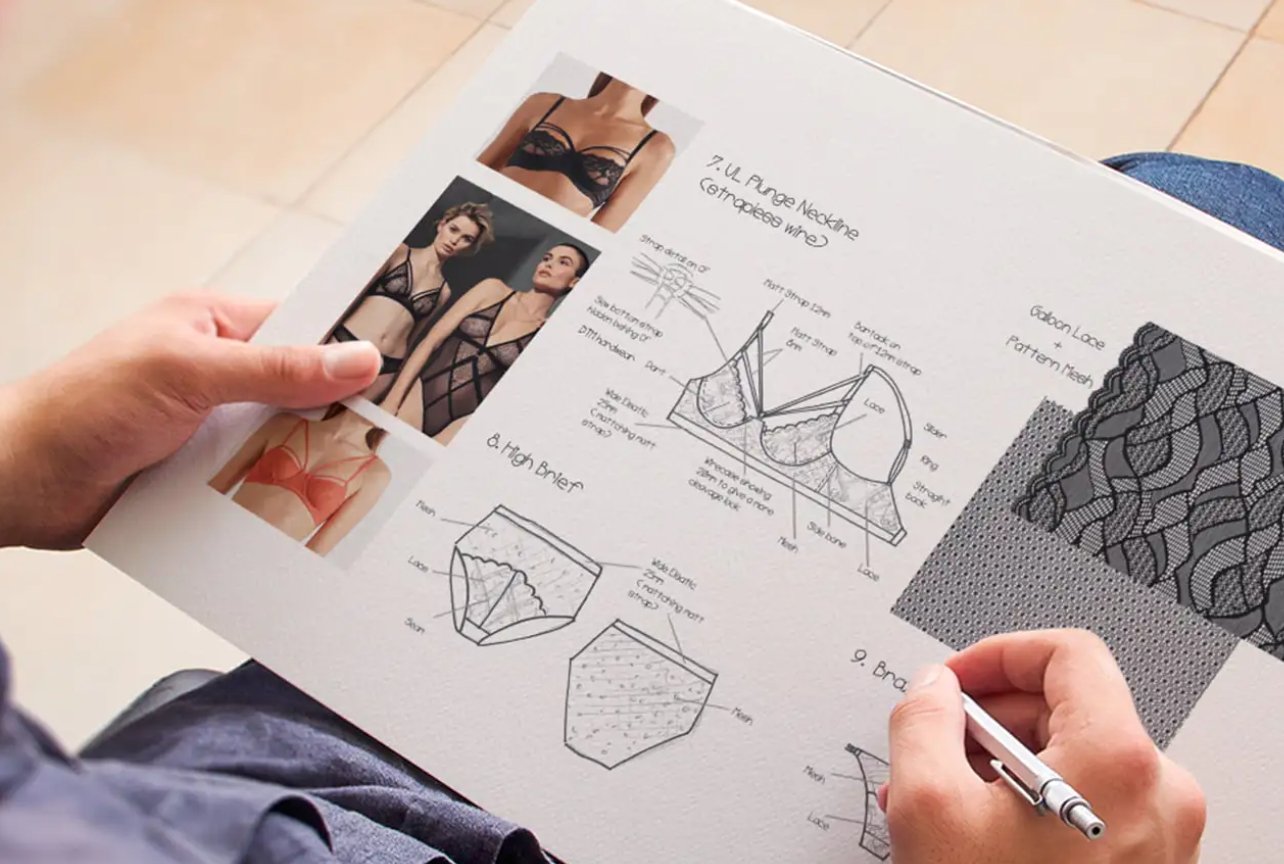
Before you can find the right partner, you need to know exactly what you’re looking for. The best clients I work with come to me with a clear vision. This makes the entire process smoother and more efficient. A complete plan allows me and my team to give you an accurate quote and a perfect first sample.
Your Brand Blueprint
Your brief to a potential supplier should include:
- Your Target Customer: Who are you selling to? A young, trendy audience or women looking for mature comfort?
- Product Details: Are you making everyday bras, specialty shapewear, or seamless panties? Do you need traditional stitching, or are you interested in modern adhesive bonding?
- Quality & Price Point: What will your retail price be? This helps us recommend the right fabrics and construction techniques to meet your margin goals while delivering fantastic quality.
A clear brief is the foundation of a great partnership. It shows you are serious and helps us serve you better from day one.
How Can You Find Reliable Partners Through Multiple Channels?
Drowning in a sea of suppliers on Alibaba? It’s almost impossible to know who is a real factory and who is just a middleman. This makes finding a trustworthy partner difficult.
Use a combination of sourcing channels. B2B platforms like Alibaba are a starting point. Also use targeted Google searches for specialists (e.g., "seamless shapewear manufacturer") and attend industry trade shows to meet partners in person.
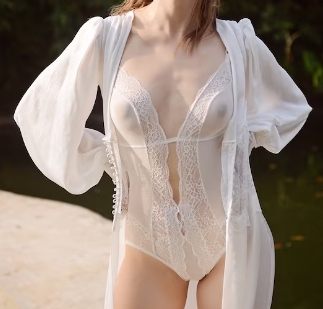
Finding a factory like mine can happen in a few ways. Many brand owners like Mark use a multi-channel approach to find the best fit. Each channel has its pros and cons.
Where to Look for Suppliers
- B2B Websites: Sites like Alibaba are good for finding a large number of suppliers. To find the good ones, look for profiles that show they are a verified manufacturer with many years of experience, a high response rate, and clear certifications listed.
- Google Search: This is a great way to find specialists. If you search for "OEKO-TEX certified bra factory China" or "low MOQ lingerie manufacturer," you are more likely to find factories with the specific capabilities you need.
- Trade Shows: This is the best way to build a real relationship. You can touch the products, see the quality for yourself, and speak directly to the people you might be working with. I find this is where the strongest partnerships begin.
| Sourcing Channel | Pros | Cons |
|---|---|---|
| B2B Platforms | Huge selection, easy to compare basic info | Many traders, hard to verify quality online |
| Google Search | Can find niche specialists, direct contact | Can be time-consuming to vet each one |
| Trade Shows | See products in person, build relationships | Can be expensive to attend, time-limited |
Why is Sample Testing So Crucial for Your Brand?
Did you approve a perfect-looking photo, only to receive a real product that feels cheap? This is a common mistake that can ruin your first production run and your brand’s reputation.
Sample testing is your physical proof of quality. It allows you to check the fit, feel, and construction before you commit to a bulk order. It confirms the supplier truly understands your requirements.
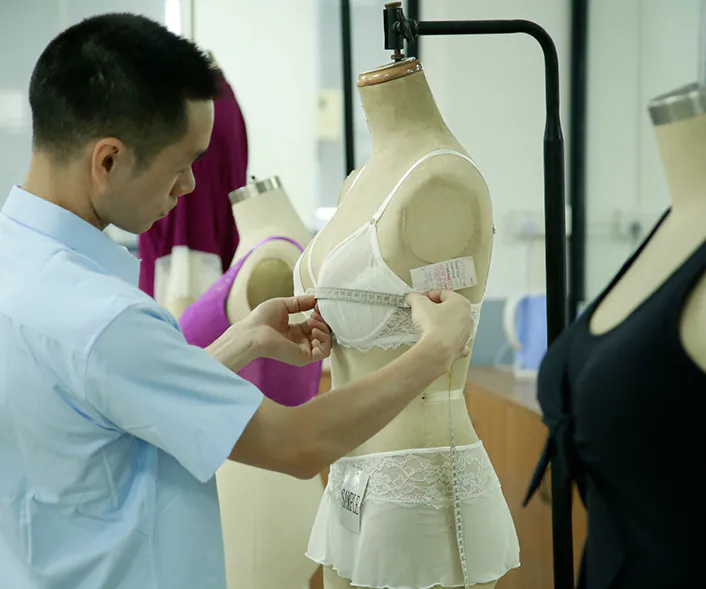
A photo can’t tell you how a fabric feels or how a seam holds up under stress. The sample is the most important part of the R&D process. This is where you see our promises in action. My factory is proud to offer fast sampling, usually in 7-10 days, because I know how critical this step is for you. When you receive your sample, you need to be very thorough.
Your Sample Evaluation Checklist
- Check the Fit: Does it match your size chart? The best way is to test it on a real fit model if you have one.
- Inspect the Workmanship: Look closely at the stitches. Are they neat and secure? If it’s a seamless or bonded item, are the edges clean and strong?
- Evaluate the Materials: Does the fabric feel the way you expected? Does the elastic stretch and recover well? Do the clasps and adjusters work smoothly?
Give your supplier clear, specific feedback. It’s much more helpful to say, "The underarm seam is puckered," than to just say, "I don’t like it." This step builds a bridge of communication and ensures your bulk order is perfect.
How Do You Negotiate Fair Prices and Terms?
Feeling pressured to accept unfair payment terms? Hidden costs and inflexible production schedules can destroy a startup’s cash flow before you even get started.
Negotiate beyond just the unit price. A true partnership involves clear discussion on Minimum Order Quantities (MOQs), payment terms (e.g., 30% deposit), production lead times, and shipping terms (Incoterms like FOB).
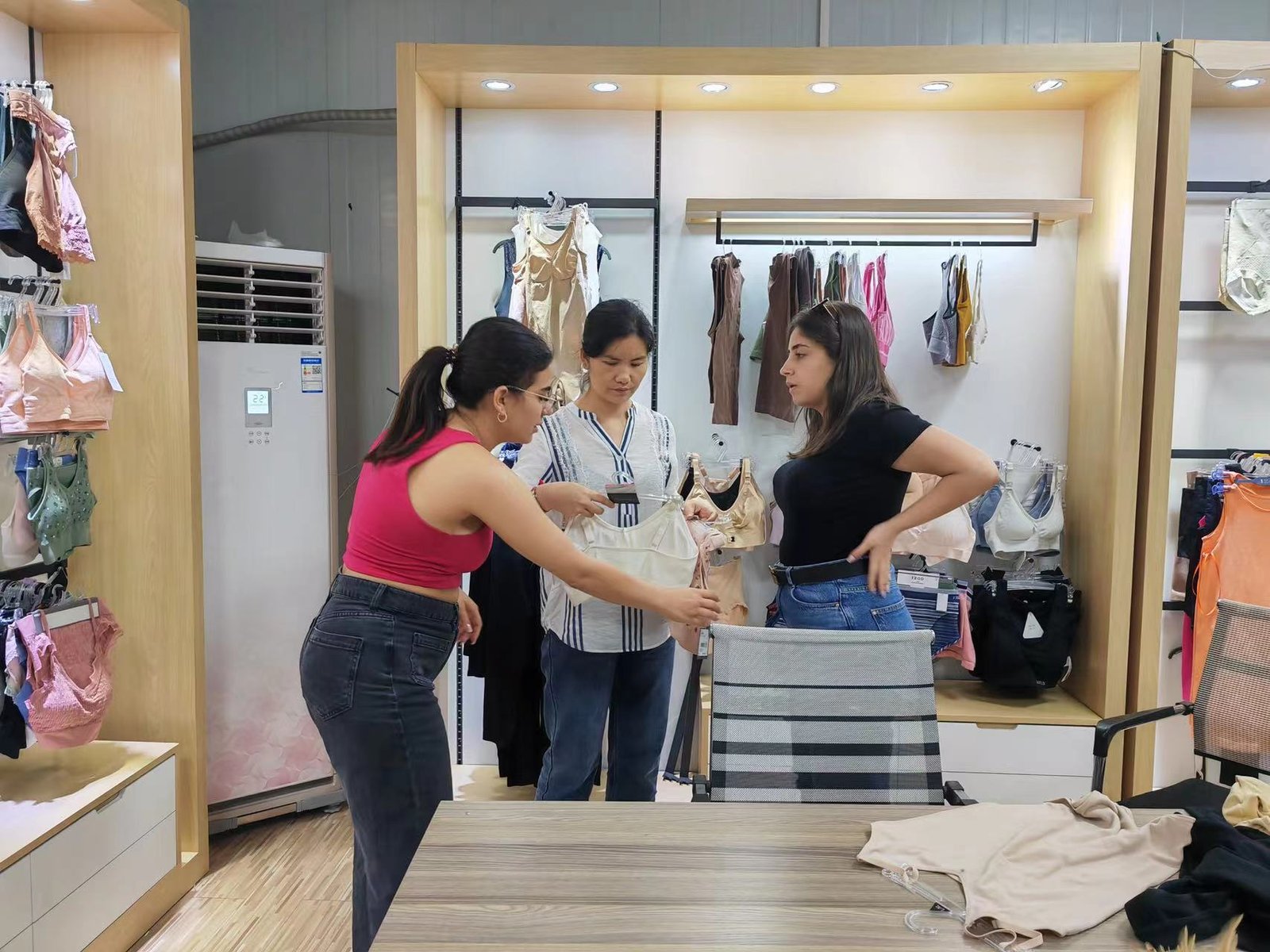
Negotiation is a conversation, not a battle. As a manufacturer who wants to build long-term relationships, I believe in being transparent and flexible. The price of a garment depends on the materials, the complexity of the design, and the order quantity. But the conversation shouldn’t stop there.
Key Terms to Discuss
- Unit Price: This is the cost per item. Be realistic; high-quality materials and complex sewing cost more.
- Minimum Order Quantity (MOQ): This is the smallest order a factory will accept. I offer flexible MOQs of 300-500 pieces per color because I want to help new brands get started without a huge investment.
- Payment Terms: The industry standard is a 30% deposit to start production and the remaining 70% paid before shipping. Be very careful if a supplier asks for 100% upfront.
- Lead Time: This is the time from when you place the order to when it’s ready to ship. Get this confirmed in writing to avoid delays that can make you miss a selling season.
Why Should You Always Try to Visit a Factory Before Committing?
Does the supplier’s website look amazing? What if it’s just a slick webpage for a tiny, disorganized workshop? This is a huge risk for any serious brand owner.
A factory visit is the ultimate verification. It allows you to see their equipment, watch their quality control in action, meet the team, and confirm that you are partnering with a capable, professional, and ethical operation.

If you are able to, there is no substitute for seeing the factory with your own eyes. This is how you confirm everything you’ve been told. It’s the best way to avoid problems like fake certifications or poor communication that I know are major pain points for buyers. When a client visits my 10,000 sqm facility, they see the reality of our promises.
What to Look For During a Visit
- The Production Floor: Is it clean and organized? Do the workers seem to be in a safe environment? This is a sign of good management and can point to ethical standards like BSCI readiness.
- Quality Control: Are there inspectors checking products at different stages—cutting, sewing, and final review? This shows a commitment to quality.
- The Team: Can you communicate easily with your sales contact and their managers? Building a personal connection with the team you’ll be working with every day is invaluable.
A factory visit builds a level of trust and confidence that you simply cannot get through emails or video calls.
Conclusion
Finding the right supplier is a systematic process, not an accident. By following these steps, you can find a true partner who will help you build a successful and lasting brand.